
Randy Waldrum: The Coach Who Rebuilt The Super Falcons, Reached the World Stage and Ended a 16-Year Olympic Wait.
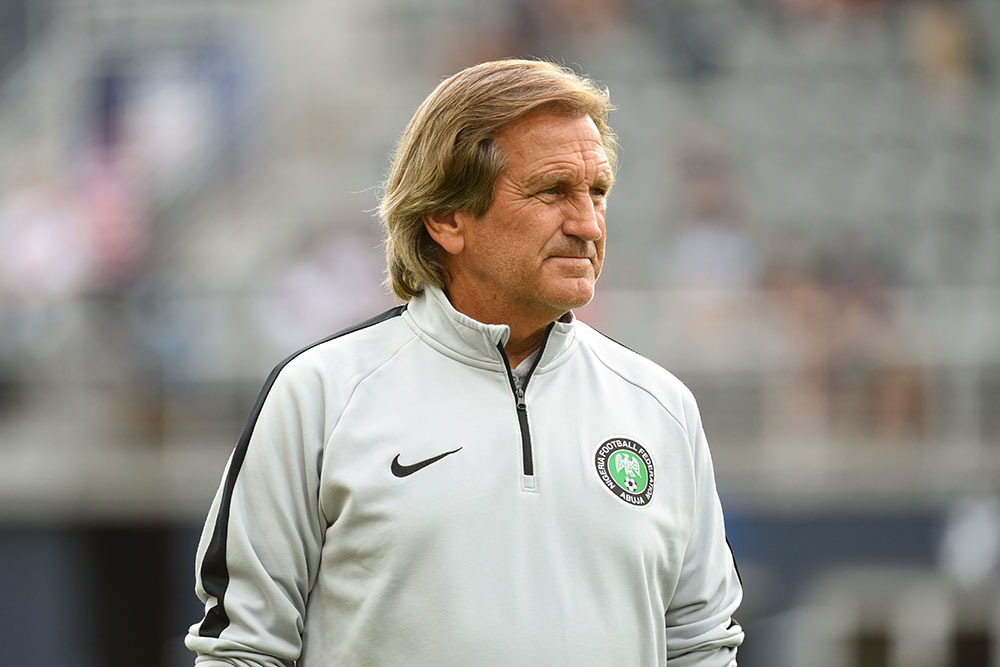
Randy Waldrum’s tenure as Head Coach of the Super Falcons came during one of the most challenging periods in the history of international football.
Appointed during the COVID-19 era, the American coach had to navigate a difficult period marked by disrupted football calendars, limited international engagements, travel restrictions and the general uncertainty that affected national teams across the world. These circumstances inevitably affected the opportunities available to him to build, assess and consistently work with his team.
Unlike many coaches who enjoy several continental championships and long periods of uninterrupted international activity, Waldrum had the opportunity to lead the Super Falcons to only one Women’s Africa Cup of Nations (WAFCON) during his tenure.
That tournament came in Morocco in 2022 and proved to be a crucial chapter in his time with the Super Falcons.
Nigeria reached the semi-finals of the competition, where the team faced the host nation, Morocco. In a highly competitive encounter, the Super Falcons fought hard despite difficult circumstances and eventually lost narrowly on penalties after the match ended level following regulation and extra time.
While Nigeria did not reach the final, the campaign achieved one of its most important objectives, qualification for the 2023 FIFA Women’s World Cup in Australia and New Zealand.
That qualification ensured that the Super Falcons maintained their proud tradition of appearing at the biggest stage in women’s football.
The 2022 WAFCON campaign was also significant because it came during a period of transition for the Super Falcons. Waldrum was gradually working to reshape the squad, bringing fresh players into the team while maintaining a balance with experienced members of the national side.
His tenure would eventually become known for the emergence and integration of a new generation of Super Falcons players.
Waldrum helped identify, convince and integrate players such as Michelle Alozie, Jennifer Echegini, Toni Payne and Esther Okoronkwo into the Nigerian national team.
These players brought new energy, technical quality and versatility to the Super Falcons, helping to transform the composition of the squad.
Importantly, Waldrum’s rebuilding process was not limited to players based outside Nigeria.
He also demonstrated confidence in talents who had developed through the NWFL Premiership, opening the doors of the Super Falcons to promising players from the domestic league.
Players such as Deborah Abiodun, Rofiat Imuran, Oluwatosin Demehin and Gift Monday all had their roots in the NWFL Premiership before becoming part of the Super Falcons setup.
His willingness to trust these players was particularly evident ahead of the 2023 FIFA Women’s World Cup, where some of these emerging talents were given the opportunity to represent Nigeria on the biggest stage in women’s football.
The World Cup in Australia and New Zealand would become one of the defining moments of Waldrum’s reign.
Nigeria was placed in a challenging group alongside Olympic champions Canada, co-hosts Australia and the Republic of Ireland. Despite the difficult opposition, the Super Falcons produced one of their most memorable performances at a FIFA Women’s World Cup.
They opened their campaign with a disciplined goalless draw against Canada before producing a famous 3-2 victory over co-hosts Australia.
Nigeria then drew with the Republic of Ireland to secure qualification for the Round of 16.
In the knockout stage, the Super Falcons faced European champions England and delivered another outstanding performance. Nigeria held England scoreless for 120 minutes and took the match to a penalty shootout, where the Lionesses eventually progressed.
Although the Super Falcons exited the competition, their performances earned widespread admiration and restored confidence in the ability of the team to compete against the best nations in the world.
Waldrum’s achievements did not end with the World cup.
In 2024, he led the Super Falcons through another historic qualification campaign, ending Nigeria’s long wait for a return to the Olympic Games.
The Super Falcons had last featured at the Olympics in Beijing 2008. Under Waldrum, Nigeria successfully qualified for the Paris 2024 Olympic Games, bringing an end to a 16-year absence from the women’s football event.
The achievement was particularly remarkable given the limited opportunities and disruptions that characterised the earlier part of his tenure.
Waldrum’s time with the Super Falcons must therefore be viewed within the context of the era in which he worked.
He took charge during the COVID-19 period, when international football was heavily disrupted. He had only one opportunity to lead Nigeria at the WAFCON, yet he successfully guided the team to a World Cup qualification place.
At that sole WAFCON appearance, the Super Falcons reached the semi-finals before losing narrowly to hosts Morocco on penalties.
He then led Nigeria to one of its strongest recent performances at the FIFA Women’s World Cup, reaching the Round of 16 and pushing European champions England all the way to penalties.
Perhaps most significantly, he helped return the Super Falcons to the Olympic Games after a 16-year wait.
By integrating players such as Michelle Alozie, Jennifer Echegini, Toni Payne and Esther Okoronkwo, while also giving opportunities to domestic league talents including Deborah Abiodun, Rofiat Imuran, Oluwatosin Demehin, Gift Monday and few others, Waldrum expanded Nigeria’s player pool and helped lay the foundation for a new generation.
His tenure was not defined by the number of WAFCON tournaments he attended or the number of years he spent in charge.
It was defined by the circumstances he overcame and the impact he made with the opportunities available to him.
Randy Waldrum took charge during a difficult global period, qualified Nigeria for the 2023 FIFA Women’s World Cup, reached the Round of 16 against some of the world’s best teams, ended a 16-year Olympic drought and helped build a new generation of Super Falcons.
Sedara Philip is a Sports writer, an administrator,Journalist,and editor