
Morocco’s Football Revolution: How Africa’s New Powerhouse Was Built
By Sportsgister
Morocco’s recent ascent in world football is not just remarkable it is transformational. In a few short years, the North African nation has rewritten the narrative of African football excellence, proving that sustained vision, heavy investment, and meticulous planning can yield historic results.
From the heights of the 2022 FIFA World Cup to the triumph of their Olympic and youth teams, Morocco has become the symbol of football evolution on the African continent.
Their success is not born of luck, but of a long-term strategy that prioritizes structure, infrastructure, and human development over short-lived glory.
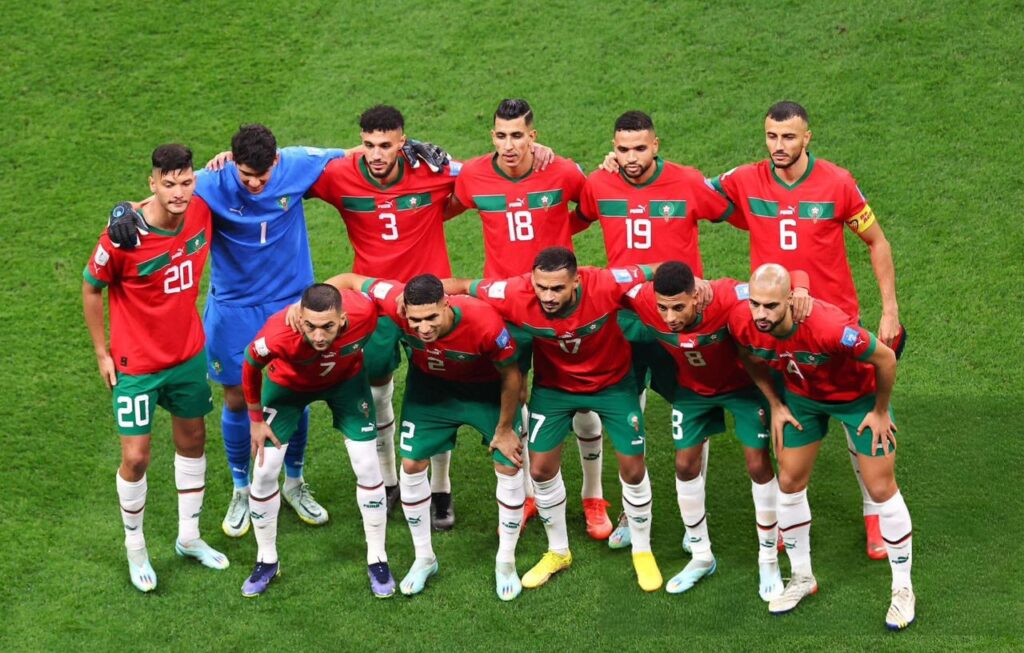
In 2022, Morocco shocked the football world when their senior national team reached the semifinals of the FIFA World Cup in Qatar, finishing fourth the best-ever performance by an African or Arab country.
Under coach Walid Regragui, the Atlas Lions displayed a blend of tactical discipline, unity, and technical flair that earned global admiration.
The victories over Spain and Portugal were more than just upsets; they were statements that Africa, with the right planning and mentality, can go toe-to-toe with Europe’s elite. The Atlas Lions inspired not just their countrymen but millions across Africa, offering hope that the so-called “football gap” could be bridged.
Two years later, at the 2024 Paris Olympic Games, Morocco’s U-23 side added another layer to that legacy by clinching the bronze medal their first-ever Olympic podium finish. That achievement confirmed the depth and continuity of the nation’s football development program.
And now, in 2025, the Moroccan U-20 national team has reached the FIFA U-20 World Cup Final, another unprecedented feat that completes a remarkable three-year trajectory across all levels of the game.
This is not a coincidence it is the culmination of over a decade of structured planning.
At the heart of Morocco’s transformation lies the Royal Moroccan Football Federation (FRMF), led by Fouzi Lekjaa, whose visionary leadership has revolutionized football governance in the country.
One of the cornerstones of this revolution is the Mohammed VI Football Complex a sprawling, world-class facility inaugurated in 2019, estimated to have cost over $65 million.
It features multiple training pitches, sports science laboratories, recovery centers, and educational facilities. It is regarded as one of the finest football academies globally comparable to elite European setups such as France’s Clairefontaine or England’s St. George’s Park.
The complex serves as the central hub for all Moroccan teams men’s, women’s, and youth ensuring consistency in philosophy, fitness, and technical training. Every player, from the U-15s to the senior squad, is developed within a unified system that emphasizes technical intelligence, tactical versatility, and mental discipline.
Morocco’s domestic clubs have also benefited from the FRMF’s vision. Teams such as Wydad Casablanca, Raja Casablanca, and RS Berkane have consistently dominated continental competitions, providing a steady pipeline of homegrown talent for the national teams.
Furthermore, Morocco’s federation has strategically tapped into its diaspora talent pool, attracting top players born in Europe like Achraf Hakimi, Sofyan Amrabat, and Hakim Ziyech while maintaining strong links to locally nurtured stars. This dual approach has created a perfect balance of technical quality and local identity.
What makes Morocco’s rise even more impressive is its holistic approach. The FRMF hasn’t just focused on men’s football. The women’s game has experienced similar growth Morocco’s women’s national team reached the final of the 2022 and 2024 Women’s Africa Cup of Nations and qualified for the 2023 Women’s World Cup, where they reached the Round of 16 in their debut appearance.
The FRMF has also invested in coaching education and referee training, ensuring that the domestic football ecosystem remains robust and self-sustaining. Young coaches receive international-standard training, while clubs are mandated to meet licensing requirements before competing in the top flight — an area where many African leagues continue to struggle.
This systemic progress reflects a simple truth: Morocco’s success is not an accident it is engineered.
For the rest of Africa, Morocco’s rise offers powerful lessons. The continent has never lacked talent it has lacked structure. Too often, football in Africa is hampered by inconsistent leadership, poor infrastructure, political interference, and a lack of continuity in development plans.
Morocco’s example proves that with good governance, accountability, and strategic investment, African nations can compete consistently at the global level. The key is not to chase short-term success but to build systems that outlive individual teams and administrations.
If other African federations commit to similar long-term projects investing in academies, empowering coaches, and modernizing league systems the dream of an African team winning the World Cup will shift from fantasy to reality.
From Qatar to Paris to Valparaíso, Morocco’s rise has been a story of ambition, belief, and national pride. The Atlas Lions and their younger counterparts have shown that Africa’s potential is limitless when nurtured through discipline and planning.
Morocco has now become Africa’s gold standard a living blueprint of what can be achieved when vision meets execution.
The rest of the continent must not merely applaud it must act. Because Morocco’s journey reminds us all of a powerful truth: Africa’s time in world football has come but only those who prepare will rise.
Sedara Philip is a Sports writer, an administrator,Journalist,and editor