

The Far-Reaching Implications Of Golden Eaglets Missing A Second Successive AFCON U-17 Championship
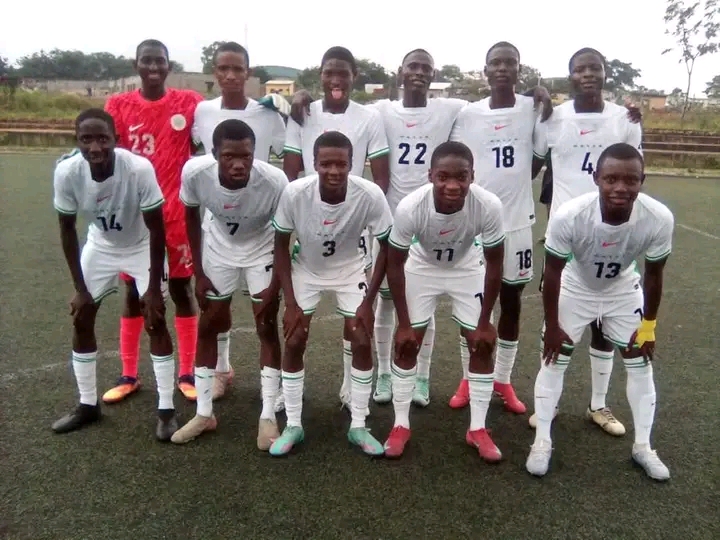
By Sedara Philip
Nigeria’s footballing landscape was dealt a fresh blow on Thursday night when the Golden Eaglets, the nation’s U-17 team, fell 2-0 to Ghana in the WAFU B qualifiers.
The defeat not only knocked Nigeria out of the regional competition but also confirmed that the five-time FIFA U-17 World Cup champions will miss the 2026 Africa U-17 Cup of Nations (AFCON) — for the second time in succession.
This development carries weighty implications, not just for the present generation of players but for the future of youth football development in Nigeria.
1. A Stalled Development Pathway
The AFCON U-17 tournament is more than just a competition; it is a crucial development pathway for young African footballers.
Participation exposes players to continental competition, raises their technical awareness, and prepares them for the demands of professional football. Missing out means Nigerian youngsters will lack that vital stage where talents are sharpened, character is tested, and international scouts discover future stars.
For a country that prides itself on producing world-class talents from the U-17 level — such as Nwankwo Kanu, Wilson Oruma, Victor Osimhen, and Kelechi Iheanacho — two consecutive absences reflect a gap that could disrupt Nigeria’s traditional conveyor belt of talent.
2. Loss of World Cup Opportunity
The AFCON U-17 championship doubles as a qualifying tournament for the FIFA U-17 World Cup.
Nigeria’s absence from the African showpiece automatically means no appearance at the global stage. The implications are stark:
Diminished visibility for Nigerian football talent in the global market.
Reduced opportunities for players to secure scholarships, academy contracts, and professional deals abroad.
A blow to Nigeria’s footballing reputation as the most successful U-17 team in the world, with five World Cup titles.
3. Weakening the Transition into Higher Levels
Youth football serves as the foundation for the U-20, U-23, and ultimately the senior national team, the Super Eagles.
A weak U-17 setup will inevitably affect the pool of quality players feeding into higher categories. By missing two successive AFCON U-17 tournaments, Nigeria risks creating a “lost generation” of footballers who may never fulfill their potential.
This could explain the increasing inconsistency in the Super Eagles in recent years, where reliance on foreign-born players has grown due to gaps in homegrown development.
4. Questions on Structure and Preparation
The repeated failure signals deeper issues within Nigeria’s football administration. Key concerns include:
Poor talent identification processes at grassroots level.
Inadequate preparation and investment in youth teams compared to rivals like Senegal and Ghana.
Overreliance on short-term selections, rather than long-term development strategies.
It raises the question of whether Nigeria is still committed to a sustainable youth football structure, or whether politics and mismanagement have overshadowed the nurturing of raw talent.
5. Wider Social and Economic Implications
Football at the youth level is more than sport — it is an escape route for thousands of Nigerian youths who dream of breaking into professional football. The absence of platforms like AFCON U-17 limits such opportunities, potentially discouraging younger players and reducing Nigeria’s influence in African football.
Economically, fewer players breaking into European academies also means fewer success stories that bring remittances, endorsements, and reinvestments back into Nigerian football.
The Way Forward
Nigeria must treat this moment as a wake-up call. The solution lies in:
Revamping grassroots football competitions across states and local councils.
Instituting a transparent scouting system that prioritizes merit.
Investing in quality coaching, infrastructure, and long-term player monitoring.
Ensuring stability in football administration, free from politics and short-termism.
The Golden Eaglets’ golden history should not be allowed to fade into memory. Nigeria must return to the basics — a strong grassroots football culture, a solid developmental pathway, and proper planning.
Only then can the nation reclaim its rightful place as the breeding ground of the world’s best young footballers.

Sedara Philip is a Sports writer, an administrator,Journalist,and editor