

AFCON 2025 And The Shame Of The Towel Games
3 min read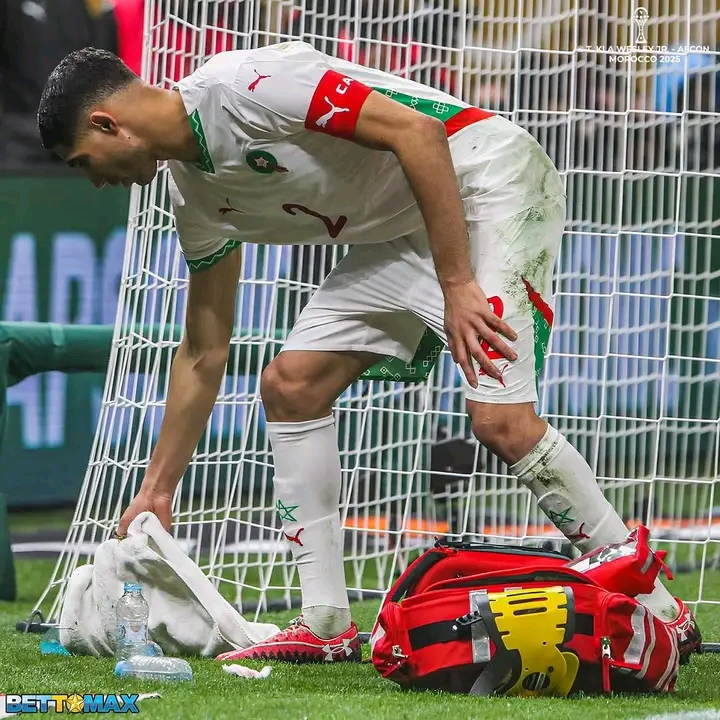
By Sportsgister
The 2025 Africa Cup of Nations final between Senegal and Morocco should have been remembered solely for footballing excellence, tactical depth, and the nerve-wracking drama that defines
Africa’s biggest sporting spectacle. Instead, it will forever carry an embarrassing footnote: a pattern of calculated distraction that crossed the line from gamesmanship into outright disgrace.
Under the steady rain at the Prince Moulay Abdellah Stadium, as Senegal and Morocco battled for continental supremacy, the spotlight drifted away from the pitch and onto the goalmouth specifically, to a small but vital piece of equipment: the goalkeeper’s towel.
What unfolded was not an isolated incident or an accident of overzealous ball boys. It was a repeat performance.
Throughout the final, Senegal goalkeeper Edouard Mendy’s towelused to dry his gloves in wet conditions kept disappearing.
Video evidence showed Senegal’s reserve goalkeeper, Yehvann Diouf, repeatedly retrieving towels and shielding them from ball boys and even opposing players. In one widely shared clip,
Moroccan captain Achraf Hakimi appeared to throw the towel away from the pitch-side area. By the end of the night, Diouf had become an unlikely symbol of resistance: a “towel guardian” defending not just equipment, but fairness.
In the semifinal against Nigeria, Super Eagles goalkeeper Stanley Nwabali endured the same treatment. His towel was removed multiple times, leading to visible frustration and confrontations.
CAF’s failure to address that incident decisively sent a damaging message: that such conduct could be tolerated, even normalized. Predictably, it resurfaced on the biggest stage of all the final.
For goalkeepers, especially in rainy conditions, towels are essential. Dry gloves mean grip, control, confidence particularly during penalties, when margins are razor-thin.
Removing a goalkeeper’s towel is not harmless mischief; it is a deliberate attempt to disrupt performance and concentration.
When such actions are repeated, coordinated, and carried out by ball boys, stewards, and players, they cease to be coincidence.
That is why the defense that “ball boys acted on their own” rings hollow. Ball boys are instructed. They operate within systems of control.
The pattern across two high-profile matches points to planning, not spontaneity.
More troubling is the involvement direct or indirect.of senior players. For an African Footballer of the Year, a global star who plies his trade at the highest level in Europe, to be associated with such unsporting behavior is deeply disappointing.
These are actions one would never dare attempt at Paris Saint-Germain or in the UEFA Champions League, where discipline, scrutiny, and sanctions are swift. Why, then, should Africa accept less?
The irony is painful. Morocco, despite this controversy, was awarded the Fair Play Team of the Tournament a decision that only deepened public outrage and further eroded confidence in CAF’s commitment to integrity.
Fair play is not a certificate handed out at closing ceremonies; it is conduct demonstrated under pressure, especially when the stakes are highest.
To Senegal’s credit, the Teranga Lions learned from Nigeria’s ordeal. They came prepared, stayed focused, and refused to be rattled.
Mendy saved a crucial penalty. Senegal weathered the delays, protests, and distractions, and found the decisive goal in extra time to claim a deserved 1–0 victory. In doing so, they won not just the trophy, but the moral high ground.
Stanley Nwabali’s post-match jibe “Make una use all my towel una carry wipe your tears” captured the mood of many African fans: frustration mixed with dark humor at a tactic that ultimately failed.
But laughter should not obscure the bigger issue.
AFCON deserves better. African footballers deserve better. When hosting rights are abused to gain unfair advantage, the credibility of the competition suffers. CAF’s silence in the face of repeated misconduct is no longer neutral; it is enabling.
This tournament has once again shown Africa’s immense footballing talent, passion, and global relevance. It has also exposed a governance gap that must be urgently addressed.
Clear regulations on ball boy conduct, strict sanctions for interference with players’ equipment, and accountability regardless of host status are non-negotiable if AFCON is to command the respect it seeks.
Football should be decided by skill, courage, and tactics not by stolen towels.
AFCON 2025 will be remembered for Senegal’s triumph. But it will also be remembered as a cautionary tale: that when fair play is neglected, even the smallest acts can cast the longest shadows.
Sedara Philip is a Sports writer, an administrator,Journalist,and editor