
Mikel Obi’s Bold Call:Does He Have The Moral Right To Call For NFF Dissolution?
3 min read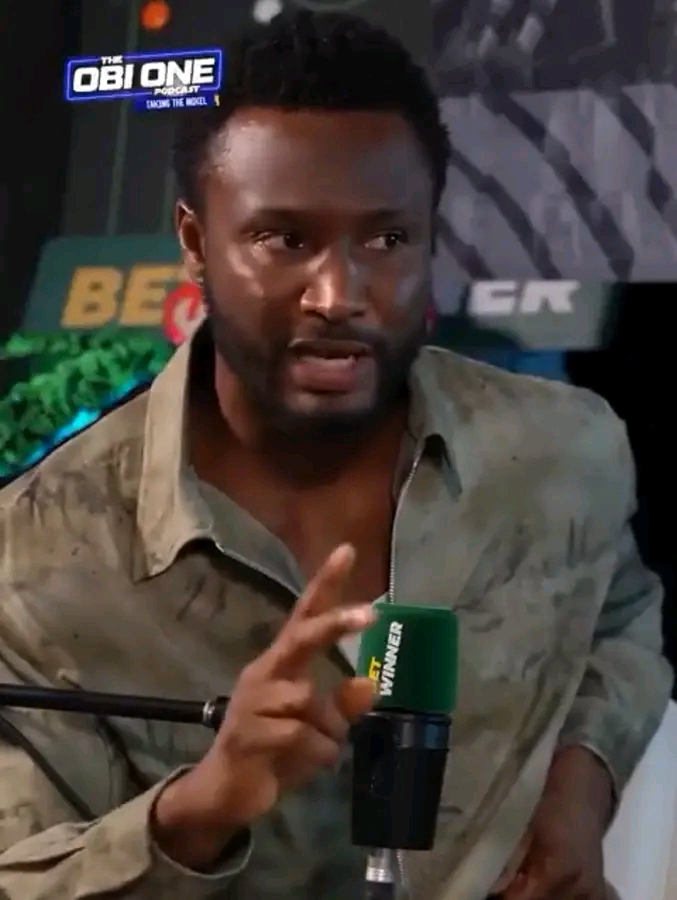
By Sportsgister
Former Super Eagles captain and midfield maestro, John Mikel Obi, recently made a strong statement that has generated heated debate across Nigeria’s football circles.
The ex-Chelsea star suggested that if Nigeria fails to qualify for the 2026 FIFA World Cup, the current board of the Nigeria Football Federation (NFF) should be dissolved.
Mikel’s proposition is both daring and controversial. On one hand, it echoes the frustration of millions of football-loving Nigerians who have watched the gradual decline of the nation’s once formidable footballing reputation. On the other hand, it raises a critical question: does Mikel Obi have the moral justification to make such a call?
Nigeria’s Football Crisis
The Super Eagles’ failure to qualify for the 2022 World Cup in Qatar was one of the most painful episodes in recent football history for Nigerians. Beyond the heartbreak, it symbolized years of administrative inefficiency, poor planning, inconsistent coaching appointments, and lack of long-term development programs within the NFF.
While the talent pool remains rich, Nigeria has often struggled to blend youthful prospects with experienced players, largely due to systemic issues. The World Cup qualifiers for 2026, jointly hosted by the USA, Canada, and Mexico, represent an opportunity for redemption. Anything less than qualification would indeed be seen as a national disaster.
Mikel Obi’s Justification
Mikel Obi is not an ordinary voice in Nigerian football. As captain of the Super Eagles, he led Nigeria to victory at the 2013 Africa Cup of Nations, and he was part of the squads that represented Nigeria at multiple World Cups. His career at Chelsea, where he won the UEFA Champions League, Premier League, FA Cups, and other laurels, also earned him international respect.
Having been in the system for nearly two decades, Mikel understands both the potential and the pitfalls of Nigerian football. He has seen firsthand how mismanagement and politics often cripple progress. This lived experience arguably gives him the moral weight to demand accountability from the NFF.
The Counterargument
However, some critics argue that while Mikel Obi was a great player, his own generation of Super Eagles stars did not consistently deliver at the global stage, despite their talent. Nigeria’s 2014 World Cup campaign, for instance, ended at the round of 16 under his captaincy, and the Super Eagles failed to qualify for the 2012 and 2015 AFCON tournaments during his playing years.
This raises questions: If systemic failures hindered his generation too, should he not also accept partial responsibility as a leader on the pitch? Furthermore, critics contend that calling for dissolution without proposing clear reforms may only recycle the same problems under a different board.
What Dissolution Could Mean
Dissolving the NFF board is not a simple decision. FIFA regulations strictly frown upon government interference in football administration, and any forced dissolution could attract a global ban on Nigeria. This could hurt players, clubs, and fans more than the administrators themselves.
Instead, what Nigeria may need is a radical restructuring of the NFF, greater financial transparency, merit-based appointments, and investment in grassroots football development. These are reforms Mikel could champion, leveraging his global football connections.
Final Word
Mikel Obi’s statement reflects the deep frustration Nigerians feel toward football governance. Whether or not he has the absolute moral justification is debatable, but what is undeniable is that his voice carries weight and his concerns mirror the sentiments of millions.
If Nigeria fails to qualify for the 2026 World Cup, the question may not just be whether the NFF board should be dissolved, but whether Nigerian football can continue under the current flawed structure without bold, sweeping reforms.
Sedara Philip is a Sports writer, an administrator,Journalist,and editor